Rodents are not picky about ZIP codes. From older bungalows near the Tower District to new builds on the outskirts of Clovis, I’ve found rats and mice in every kind of Fresno home. The climate is part of it, with long dry spells that push rodents to seek water lines in crawl spaces, and cool winters that send them into attics for warmth. Food availability matters too. Citrus trees, chicken feed, pet bowls on patios, and even compost bins give them a steady reason to stick around. When they move in, they leave droppings and urine that create more than an eyesore. Those deposits hold pathogens and allergens that can linger for months. Proper rodent droppings cleanup is about removing health risks first, then making sure the problem doesn’t return.
This is a practical guide drawn from years of rodent control in Fresno CA. I’ll walk through how to recognize the signs early, what safe decontamination looks like, and how to combine rodent proofing, trapping, and sanitation to protect your family and business.
Why droppings matter more than most people realize
Fresh rodent feces look like dark, moist grains of rice for mice and slightly larger pellets with pointed ends for rats. In Fresno I see a lot of roof rat activity, especially near palm trees and two-story homes. Roof rat droppings usually measure half an inch, tapered at both ends. House mouse droppings are smaller, about a quarter inch, with finer points. Droppings tell you species, travel routes, and nesting zones. More importantly, they carry risk. Salmonella, leptospira, and viruses can survive in droppings and urine. When dried deposits turn to dust and become airborne during sweeping or vacuuming with a regular machine, you can inhale them. People with asthma often notice flare-ups after “spring cleaning” an attic that was never sanitized.
I’ve met homeowners who tried to bleach everything without PPE and ended up with burning eyes and a cough that lasted a week. Bleach has a role, but only after you wet down droppings with the right dilution and use a HEPA-rated vacuum designed for hazardous dust. The method matters as much as the cleaner.
Fresno’s common culprits: roof rats and house mice
Roof rats dominate in neighborhoods with mature trees and overhead utility lines. They run along fences, rafters, and telephone cables, then drop into attic vents or cut through flimsy gable screens. House mice prefer lower entries. I find them in garage door gaps, under exterior doors without sweeps, and along utility penetrations behind water heaters. Both species are adept climbers, and both leave gnaw marks. If you see chew marks on wiring, rodents have been active for a while. Damage to low-voltage lines in attics often looks like shallow, evenly spaced incisions. On thicker Romex, rats will score through the sheathing and sometimes expose copper. I’ve traced a mysterious flickering light to a single rat-chewed neutral wire more than once.
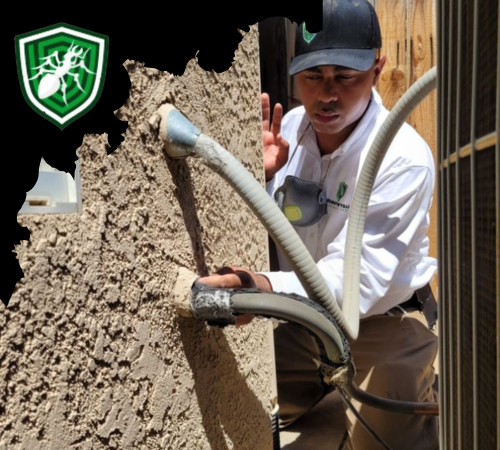
These details guide the plan: roof rat control Fresno generally starts higher, inspecting attic vents, roof returns, and eaves. House mouse control focuses on garages, kitchens, and base cabinets where plumbing cutouts leave gaps. Good rodent inspection Fresno means a flashlight, mirror, and patience. It also means understanding the structure. Stucco cracks at the weep screed or a broken crawlspace vent can be as inviting as a missing attic screen.
Health-smart cleanup: what safe looks like
If you’re dealing with a handful of droppings in a pantry, you can handle it with careful technique. An attic layered with debris is another matter. Professional attic rodent cleanup uses negative air machines, sealed containment, and HEPA vacuums to keep particles from spreading through the living space. Crews wear respirators, gloves, and suits. For homeowners, the baseline is sturdy nitrile gloves, a well-fitting N95 or P100 mask, eye protection, and a plan to avoid stirring dust.
I teach crews to mist affected areas before moving anything. The solution does not have to be harsh. There are EPA-registered disinfectants that qualify as eco-friendly rodent control options, using botanical actives while still achieving a hospital-grade kill claim. Bleach works too when mixed properly, rodent exterminator usually about one part bleach to nine parts water, but it can corrode metals and discolor materials. On porous surfaces, enzyme cleaners help break down urine crystals that keep odors alive. That urine scent is one reason infestations rebound. If you don’t neutralize it, new rodents follow the trail back in even after trapping removes the current population.
For heavy contamination, attic insulation replacement for rodents is often the cleanest path. Cellulose or fiberglass batts saturated with urine will keep stinking after treatment. In Fresno attics, I see R-values far below modern standards in older homes. When we remove fouled insulation, we bring R-values up at the same time, and energy bills drop. Think of it as pairing sanitation with an efficiency upgrade.
The cleanup sequence I trust
Over the years, I’ve settled on a sequence that consistently lowers risk and prevents rework. It starts with control and ends with proofing.
- Stabilize and control: Identify active zones, deploy traps or bait stations as appropriate, and stop new contamination. Remove and decontaminate: HEPA vacuum, bag droppings, wipe and disinfect, then deodorize and treat with enzyme where needed. Restore and seal: Replace damaged insulation and screens, and complete entry point sealing for rodents with rodent-proof materials.
That first step is easy to skip when you’re eager to clean, but if rodents are still active, you’re stuck in a loop. Humane rodent removal approaches favor trapping, especially indoors, because you can remove carcasses and verify control. Snap traps, when set correctly in secure boxes or stations where pets and children cannot reach, kill quickly. Glue boards tend to prolong suffering and create a mess. They have a narrow role for monitoring in locked commercial settings, but for homes they’re rarely worth it. When comparing snap traps vs glue traps, I choose snaps for both efficacy and humane outcome.
Rat bait stations have a place outdoors, particularly for commercial rodent control Fresno where dock doors and dumpsters draw rats from surrounding fields. Stations should be tamper-resistant and professionally maintained. Indoors, I avoid loose rodenticides because a poisoned rat can die in a wall. Odor cleanup and fly outbreaks are the price. If a severe infestation forces the use of rodenticide baits, we position them where we can retrieve carcasses, then follow with targeted odor neutralizers if needed.
When to call for professional help
You can handle a small pantry incident, but larger jobs deserve professional oversight. If you see droppings in multiple rooms, find nests of shredded paper or insulation, or hear a gnawing noise in walls at night for more than a couple of days, the population is established. Same-day rodent service Fresno is available from several outfits, and some offer 24/7 rodent control for businesses that can’t afford to shut down. Ask whether the company is licensed, bonded, insured pest control, and whether they offer a free rodent inspection Fresno to map entry points. A careful inspection takes time. If the “local exterminator near me” promises a five-minute look and a single bait station fix, you’re buying a temporary pause, not a solution.
The contractor should be comfortable with rodent exclusion services, not just trapping. That means replacing chewed gable screens with 16-gauge steel mesh, sealing foundation vents with wildlife-rated covers, installing door sweeps, and hardening pipe penetrations with mortar or copper mesh and sealant. Rodent proofing Fresno isn’t glamorous, but it holds the line long after scent trails fade.
What proper containment looks like in a home
A homeowner who moved into a Fig Garden house called me after discovering hundreds of droppings in a storage closet that shared a wall with the garage. We set up containment using plastic sheeting and painter’s tape to isolate the closet, brought in a portable HEPA unit to create negative pressure, and staged sealed waste bags. The droppings had embedded in the baseboard gap. We misted gently, loosened debris with a soft brush, and vacuumed with a HEPA backpack. The closet’s lower drywall had urine wicking, visible as shadowy staining. We cut 12 inches up, bagged the sections, sanitized the framing, and later patched and repainted. The garage side had a half-inch utility gap where the drywall met the slab. We sealed it with backer rod and sealant, then added a threshold to the door. Total time on site was six hours with two techs. The family slept easier that night because the problem was decontaminated, corrected, and sealed, not just sprayed.
Odor, allergens, and the unseen residue
A cleaned surface can still trigger allergies. Rodent urine contains proteins that provoke reactions in sensitive people. That’s why I almost always include an enzyme-based urine digestor after disinfecting. It’s not a substitute for disinfection, it’s an add-on that breaks down the stuff the germicide leaves behind. In attics, we also fog with a ULV machine that distributes a fine mist of sanitizer, not to “cover” odors but to reach surfaces between joists. Odor control gets a bad rap because some rely on masking agents. Done right, you target the source, then apply oxidizers or enzymes to neutralize residues. With roof rat control Fresno cases that involved nests in insulation, the change is dramatic. The sharp, musky smell that hits you when you open an attic hatch fades by the next day.
Safety during cleanup if you must DIY
If you’re tackling a small area while waiting for service, protect your lungs and eyes, keep the area damp, and pack waste correctly. Do not use a household vacuum. It pushes fine particles through the exhaust and spreads contamination. Double-bag waste and dispose according to local guidelines. Wash hands and forearms with soap and water immediately after, even if you wore gloves. And resist the urge to spray every surface with bleach. It’s corrosive and, on certain surfaces, it’s less effective than a proper disinfectant designed for organic load. If you suspect exposure to droppings from deer mice or you develop flu-like symptoms after cleanup, call your doctor. Fresno is not a hotspot for hantavirus, but risk hinges on exposure, not a map pin.

Finding the entry points you can’t see from the ground
I once tracked a persistent rat problem to a torn ridge vent only visible from the roof. The homeowner had patched three ground-level gaps, but the rats arrived by air every night. On another job near Woodward Park, a trio of roof rats used a popcorn-textured stucco crack to access the attic through the eave. Cracks that small don’t look like a door, but rodents compress their bodies and leverage whisker feedback to squeeze through. For a house mouse, a hole the size of a dime is enough. For a rat, think quarter-sized. Entry point sealing for rodents is exacting work. You need to know which materials they won’t chew through. Expanding foam alone is a temporary cork, not a fix. Use metal mesh, mortar, and hardware cloth. For larger caps and covers, choose galvanized or stainless steel with snug fasteners rather than friction fit.
Trapping strategies that actually work
Trapping is a craft. I favor professional-grade wooden snap traps with a firm jaw and reliable trigger. In Fresno kitchens, I set them along runways behind the refrigerator or under the sink, baited with a mix that sticks, such as peanut butter with oats. Pre-baiting for a day or two without setting the trap helps wary mice accept the new hardware. For roof rats in attics, I mount traps on rafters along travel lines, always secured inside protective boxes to avoid accidental contact. I wear nitrile gloves and handle traps with a small pair of pliers to avoid transferring human scent. The goal is a quick, clean dispatch. Check traps daily. Leaving a trap uncleared for days invites secondary pests and odor.
Where outdoor pressure is intense, bait stations can reduce the incoming rat load. They should be part of an integrated approach with rodent proofing. A common mistake is relying on bait alone and ignoring kernel feed spills in a backyard chicken run or fallen fruit from citrus trees. You cannot out-bait a buffet.
Commercial properties have different stakes
Restaurants, food processors, and warehouses face zero tolerance from auditors and customers. Commercial rodent control Fresno often involves electronic logbooks, remote trap monitoring, and documented thresholds. Roof lines with HVAC curb gaps, dock levelers with rubber lips chewed to ribbons, and cardboard storage on floors create predictable routes and nest zones. We coach managers to shift to sealed bins, elevate storage six inches off the ground, and maintain sweep logs. On a refrigerated warehouse off Golden State Boulevard, a simple change to dock door habits cut rodent sightings by 80 percent in a month. The team had been leaving doors open during breaks. Installing air curtains helped, but changing behavior sealed the deal.
Real numbers: what cleanup and control typically cost
Homeowners often ask about the cost of rodent control Fresno. Prices vary by size, severity, and structure. A focused interior trapping program with light sealing can run a few hundred dollars. Whole-home rodent proofing with attic sanitation, HEPA vacuuming, and insulation replacement ranges widely, often from the low thousands up to five figures for large homes with extensive contamination. Commercial programs are typically ongoing service agreements with a monthly fee that covers monitoring, devices, and reports. Beware of rock-bottom quotes that rely solely on bait. You might spend less at first and more later on repairs, odors, and lost time.
Why “eco-friendly” matters and where it can go wrong
Eco-friendly rodent control gets tossed around loosely. To me it means strategies that reduce secondary poisoning, protect pets and wildlife, and still solve the problem. Physical exclusion, habitat modification, and targeted trapping fit the bill. Rodenticide baits are sometimes necessary outdoors in heavy pressure zones, but they should be used thoughtfully. Boxes must be locked, bait must be secured inside, and service must include retrieval of carcasses when possible. I’ve seen bait programs dropped into yards with active owl boxes and backyard cats. That is poor judgment. A true humane rodent removal plan weighs the local ecology and the well-being of non-target species.
Fresno-specific habits that help
What you do day to day sets the stage. In our region, citrus drops nearly year-round, and backyard chickens are common. Secure feed in metal cans with tight lids, pick fruit weekly, and move pet bowls indoors at night. Trim palm skirts and lift tree branches back from the roof by at least six to eight feet. Swap out flimsy plastic vent covers for metal ones. Add a sweep to the bottom of the garage door and seal the side gaps with brush seals. Small steps make big differences because they chip away at the three things rodents want: food, water, and shelter.
A quick homeowner checklist for safe droppings cleanup
- Wear gloves, eye protection, and a quality mask, then gently mist droppings before moving anything. Use a HEPA-rated vacuum designed for hazardous dust or carefully pick up dampened droppings with disposable towels. Disinfect after removal, then apply an enzyme cleaner to break down urine residues that trigger odor and allergies. Double-bag waste, seal it, and wash hands and forearms thoroughly after the work. Schedule a thorough rodent inspection Fresno to find entry points and plan rodent proofing Fresno that prevents a repeat.
What a good service visit should include
If you bring in a mouse exterminator Fresno for a residential job or book rat removal Fresno for a commercial site, expect a sequence that covers more than gadgets. First, a detailed inspection inside and out, with photos of entry points and rodent infestation signs such as smear marks, gnawing, fresh droppings, and nesting materials. Second, a clear control plan that states where traps or rat bait stations will be placed, how often they’ll be checked, and what data you’ll receive. Third, a sanitation and restoration proposal that covers attic rodent cleanup if needed, surface disinfection, and odor treatment. Finally, an exclusion scope with materials and locations spelled out, not just “seal holes.” The best providers are licensed, bonded, insured pest control professionals who can explain why they chose one method over another and who stand behind their work.
The long game: keep them out for good
Rodent proofing is not a one-time spray. It is craft, maintenance, and habit. Buildings shift slightly with Fresno’s seasonal heat. Caulks shrink. Screens rust. Landscaping matures and touches eaves. Schedule a quick annual walkthrough before the first cold nights of fall. Look for light under doors, fresh rub marks, and any new gap larger than a pencil. If you hear scratching, don’t wait. The first night you hear it is the cheapest night to fix it.
Rodent droppings cleanup is the visible tip of a deeper job that protects health. Done properly, it pairs sanitation with control and prevention. Whether you live near the bluffs or closer to downtown, the principles are the same: identify, contain, clean, restore, and seal. If you want help, choose a team that brings a camera, a flashlight, and the patience to crawl where the rodents crawl. And if you choose to do parts of it yourself, work wet, use proper protection, and never ignore what the droppings are trying to tell you.